


It was supposed to be done in two months, but we are now on month seven, like all things real estate. Then again, a $220,000 10-year tax benefit makes one very patient, very quickly. Here is how we spent those seven months in the process so far.
From the get-go, a big part of our interest in the property in Troy was the myriad opportunities for tax incentives provided for investing in this property. Our strategy requires a significant upfront investment of time, money and risk, given that our approach was to gut the entire building from the start. That means that instead of simply putting up the 30% down payment we would otherwise have to provide when buying an operating building, we are creating that equity by spending the money in the community, buying materials and providing jobs. All levels of government love to incentivize job creation. So, if you spend your down payment that way, there are a lot of incentives to create mason, carpenter, plumber, and electrician jobs, among the vast array of other jobs needed to complete the project.

There are places in this country where significant incentives are offered by multiple layers of government for job-creating investment. Downtown Troy is just one of those places. There are state and federal incentives for historic preservation, federal opportunity zone benefits, as well as county and city tax incentives. After a whole lot of research, we had not found the golden ticket: an IDA PILOT program. A year into our project, it was mentioned in passing by our contractor. With the knowledge that there may be a program I am eligible for that could yield dramatic savings, I rolled up my sleeves and began research. First things first, I had to figure out what IDA stood for and where there might be some information about this PILOT, which at this time I did not even know was an acronym.
What I found out was that a PILOT, which stands for payment in lieu of taxes, was a deal between the developer and the IDA, which stands for Industrial Development Agency. The way it works is that the IDA takes temporary legal ownership of the property, which makes it exempt from regular property tax. The developer then signs an agreement to pay a fixed amount each year, according to a schedule. Typically, the scheduled property taxes start low and go higher as the years pass, anywhere from a 10- to 30-year PILOT term. The other benefits of the PILOT are a sales tax exemption for the entire construction project and a mortgage recording tax exemption. Those three benefits represent huge savings.
Having validated that we qualify for the PILOT and the scope of the benefits, the next step was to figure out how long it would take and how much it would cost. Knowing benefits, cost, and time were key to figuring out if this whole thing was worth doing. To better understand both the time and cost elements, we would need to find a vendor. And just like our work with general contractors, we planned to find at least three qualified vendors to get a price from. We knew that we needed to find attorneys with experience doing IDA applications, but we had no idea how. We could not find any local real estate attorneys that specifically mentioned IDA work on any of their websites. What we did find was a number of previous IDA applications that had been approved, on the IDAs’ websites. We discovered that in each application, the attorney representing the applicant before the IDA was listed. And just like that, we had a list of every attorney that has stood before the IDA. Not bad scoob… (in the voice of Shaggy.)
Unlike general contractors, attorneys are generally very organized, follow up, and are very responsive. So, I picked the three attorneys most frequently listed in the old applications and made some phone calls. After getting proposals that ranged from $375 to $675 per billable hour, some conversations to get to know each of the firms, and some emails back and forths to feel out the communication, the choice became clear. I picked an Albany-based firm, Sciocchetti Taber, specializing in commercial real estate. The firm has a no-nonsense getting-it-done culture and on top of it all, they are just nice.
We had our first meeting at Jacob Alejandro, a cozy cafe a couple of blocks from our building. If you are ever in Troy, it’s arguably the best coffee in town. To get things moving and get a sense of the viability of our project, the firm set up a meeting with the executive director of the Rensselaer County IDA. The idea was simple: get a sense of what types of projects are of interest to the IDA board and give a sense of our project, its scope, and its objectives. There was no sense spending close to $10K on an application if it was an easy “No” from the executive director. Lucky for us, the IDA was interested in supporting projects like ours.
Then came the real heavy lift, filling out the 41-page application and gathering all of the documents that would be needed to complete it. Having worked in project management, operations, and government, this was all right in my wheelhouse. I put in days of work that would otherwise have been billed out at hundreds of dollars an hour. A few pages of the application were just simple data entry, info about the investors and the property. Then the slightly harder questions, ones where you know the answer is somewhere online, but you have no idea what the answer is. For example, what number census tract is your property in? In over 25 years of doing this, I have never had to look up the census tract number for one of my properties. The last and most difficult part of the application asked for an employment impact forecast covering all the people that will be working fixing up the building as well as all the people working there after the renovation is finished. To make it extra fun, the application asked for a four-year forecast.
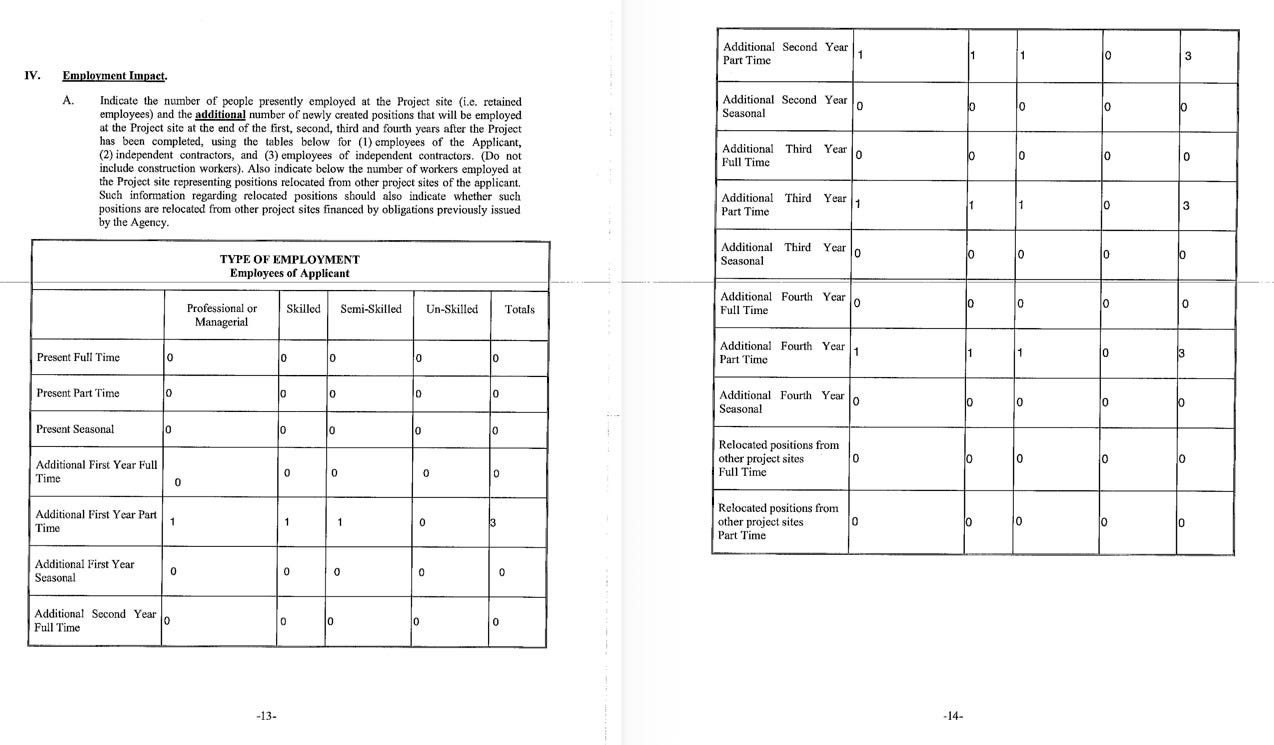
Thankfully, I had a comprehensive business plan from my soon-to-be cafe tenants, a large amount of data about the project and the building, and a bunch of AI tools at my disposal. It took a few hours of wrangling project-labor cost estimates and a bunch of iterative prompting to get to a framework that seemed viable. The AI paints the background, but its details are kind of shit. That said, the background was good enough to give a huge speed boost since all I had to focus on from then on was correcting all of the AI’s detail-averaging slop that had nothing to do with the specifics of our project. Along with the application, we submitted an environmental assessment, a project narrative, a project timeline, the planning board approval, and the property survey.
Next came the formal application requirements: a community comment hearing, an application discussion by the IDA board, and a vote to approve the project. All meetings have to be scheduled and advertised to the public and, oh, by the way, the IDA board only meets once per month. So, we thought we were in for a couple of months’ wait. Little did we know that the board would cancel both their July and August meetings. Once September rolled around, we came up for a vote and won approval, except that, unlike previously approved IDA applications, the board requested that we get a letter of support from Mayor Mantello.
At this point in the process, I thought we had reached the finish line. I was sure the letter of support from the mayor was just a formality. Little did I know that, like all politics, the politics in Troy are filled with politics. I have no idea why, but there was some political beef between the Troy IDA and the Rensselaer IDA that prevented us from getting our letter from the mayor. Frustrated at the radio silence from city hall about our letter and the ongoing delay that it was going to cause for our project, I asked my friend Carmello, the owner and head chef at LoPorto’s, an outstanding Italian restaurant, for help understanding Troy. After a few minutes of conversation, he said he would reach out to the executive director of the IDA, who was a friend of his. To make a long story short, it turned out we could also get a letter of support from the county executive instead of the mayor.
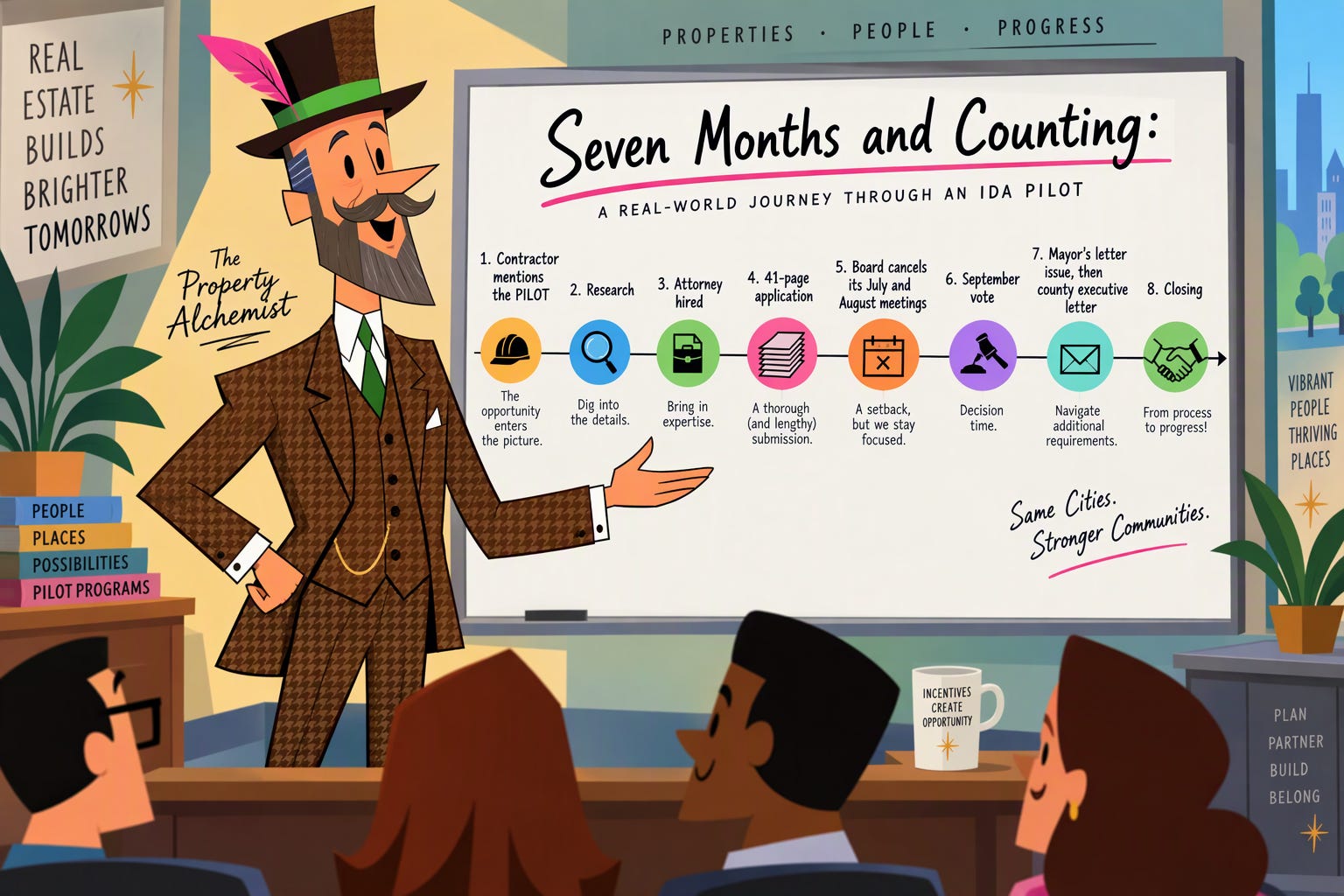
And so, here we stand on the precipice of completion. So close, but still so far. And as far as we know, we simply have to wait for the mortgage closing to get all the documents to execute. What’s a few more weeks when you are already seven months into a two-month process? If I have learned anything from this process, it’s that you need to be open-minded, ask questions, be inquisitive, and always keep your ears open. We followed up on a comment made in passing about the PILOT program, and here we are, over half a year later, waiting to close on a $220,000 tax benefit that we almost never found out about. It’s always slower, more expensive, more political, and messier than you expected; that’s why success is all about adapting while executing.
Ready for more insights from the field? I’ve made the expensive mistakes, so you don’t have to. Subscribe to get weekly strategies, real numbers, and unfiltered lessons from 25+ years of actual deals. No theory, no fluff, just lessons learned and what actually works when your money is on the line.